
Minerva Virtual Academy (MVA), founded in 2020, is an award-winning, DfE-accredited online school for 11–18 year olds. Their approach to digital-first education focuses on student wellbeing and adapting learning for the modern world. We speak to Founder and CEO Hugh Viney about developing and marketing a future-ready school, and what it means to be redefining what learning feels like for the next generation.
The traditional model of education has remained largely unchanged for decades, but the world hasn’t. What does “future readiness” mean for MVA, and what does success look like?
While it’s impossible to create one schooling approach that will suit every child, MVA provides alternative methods of learning that will enable even more students, who may usually struggle in traditional settings, to leave school with the skills that will help them feel prepared for the future – whether that’s navigating the world around them or in their careers or further education. However, rapid advancements in technology, particularly AI, also means that the world is changing right in front of our eyes. No one knows what the future is going to look like in ten years, possibly even five years. We’re having to prepare our students for an uncertain future, which can feel scary. We want to keep things simple. Success for us ultimately comes down to the happiness of our students first and foremost. When students are happy, they’re more likely to attend classes, socialise with peers, make friends and learn effectively. It’s our hope that, through MVA’s approach, they’ll go on to build confidence and become more resilient and adaptable in an increasingly unknowable world.
How does an online education differ from a traditional school? What are the key points you always communicate?
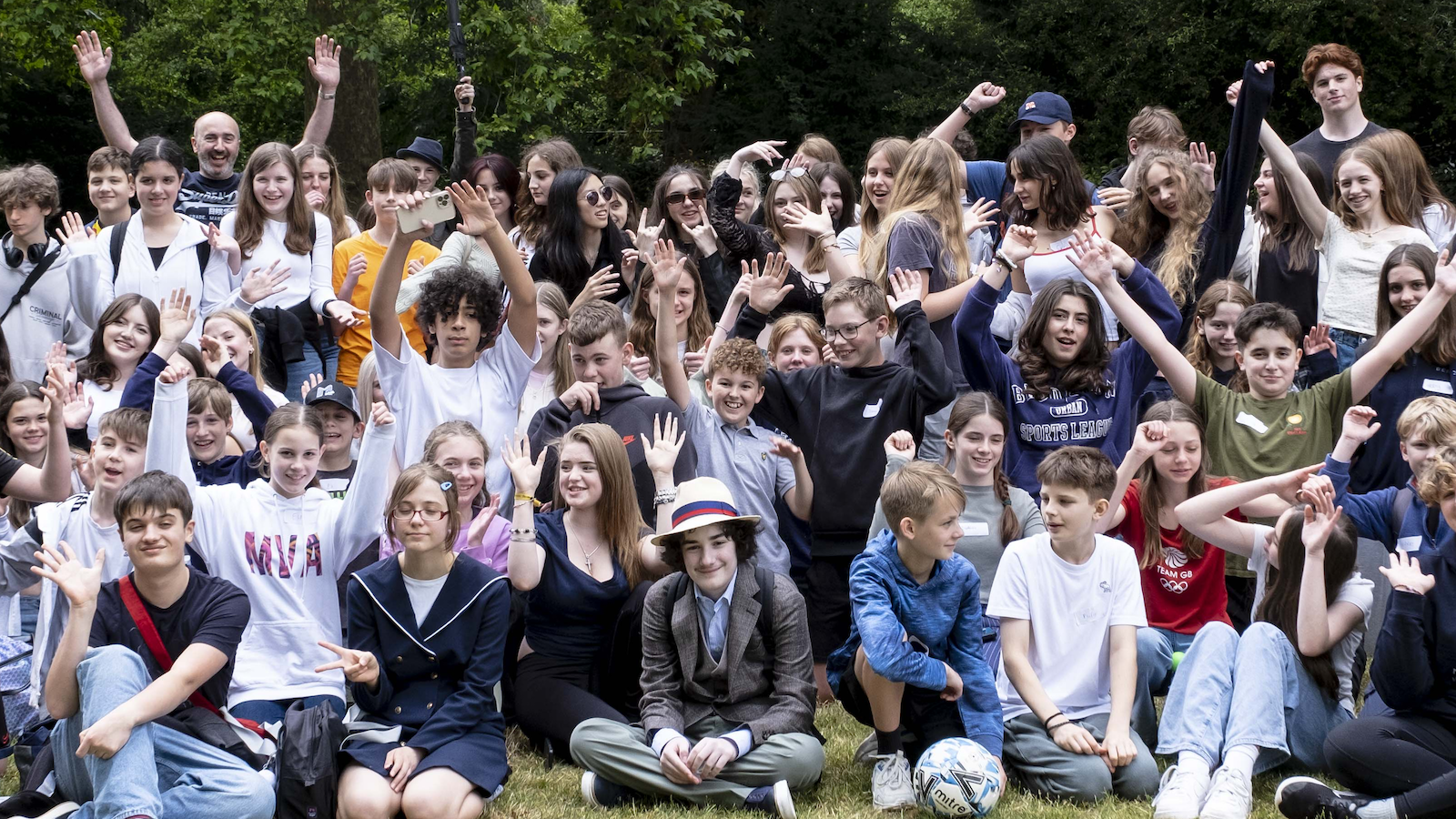
Firstly, that there is less emphasis on the online part than you might first think. Being online is simply the medium through which the students attend classes, however we do lots of in-person meetups. We have incredibly strong communities across the UK and the UAE where children and parents are meeting up of their own accord to study together, be together and work together.
The first key radical element of MVA is our academic model. Sixty per cent of the learning is done asynchronously – on your own without a teacher – before or after a lesson, while 40% of the learning is done in classes with a teacher and your peers. This combines something called flipped learning, which has been around for decades but isn’t possible to implement into traditional schools already working within a totally different structure. As a new school, we saw the potential of flipped learning within an online setting, allowing us to set up this approach from the beginning.
Then there’s our pastoral model. Every MVA student is paired with a 1:1 mentor at the start of their journey who sees them weekly for individualised support. These sessions are key to student development, teaching self-reflection, goal setting, and self-improvement. Parents really rate this feature, especially since mentors provide a progress report every two weeks, essentially acting as an up-to-date parents evening in your pocket.
The final pillar we communicate is our regular assemblies – all-school assemblies on Mondays and year group assemblies on Wednesdays – and after school programmes. We have nearly 50 after school clubs from baking and art, to chess and HIIT training.
Can you explain more about flipped learning at MVA? How do your lessons nurture human curiosity and foster independent, critical thought, rather than just delivering information through a screen?
MVA’s virtual platform features a mixture of video, audio, text and other interactive content depending on the module to help students learn a new topic. Most of our modules start with a beautiful video made by our in-house education content studio, MVA Studio, to help students engage with that topic for the first time. They might spend 30–45 minutes on the platform, joining their lesson with their teacher and classmates a couple of hours later. After the lesson, students return to the platform to consolidate their learning. Pupils who are more advanced in a topic will also have stretch tasks to complete.
A key feature of the flipped learning model is the flexibility, as the independent learning can be done at any time, as long as it’s before the lesson. You don’t get that in traditional school. The second part is that the lesson isn’t a lecture: it’s an energetic, interactive discussion where students can chat freely and feel engaged with features like polls. Combined with the online nature of the lessons, this can allow every child to thrive where they might not have in a traditional setting. For example, children who are perhaps too shy to raise their hand can drop questions in the chat, and those with neurodivergent needs aren’t distracted by a noisy classroom.
In terms of future-readiness, the main benefit the flipped model provides is teaching children discipline and self-directed learning. This doesn’t suit every child, but those it does are more prepared for a future world than they would have been with traditional schooling, as these essential skills are built into the delivery of the curriculum.
How do you communicate what makes your school unique, ensuring staff are on board with your messaging?
Our messaging is built around the single organising idea that Britain’s education system was designed for a world that no longer exists, and that MVA is proof that a better model is possible. Rather than leading with “online school,” staff tend to lead with the problem – the three crises of SEND, school absenteeism and teacher burnout – and position MVA as the answer.
To make this consistent, all internal and external communication maps back to the same four pillars: flipped learning, live lessons, 1:1 mentoring and community/enrichment. These act as a shared language across our team, providing a framework that can be adjusted to speak to each of our audiences, whether a prospective parent, a journalist or a local authority commissioner. The team doesn’t need to improvise; the narrative is built, the evidence is there, and the message is clear.
What are the common challenges you see that stop prospective families from getting in touch?
Three barriers come up repeatedly. Firstly, families, particularly those with anxious children who’ve struggled socially, worry that online schooling means learning alone, which isn’t the case with MVA. To counter this, we make the community as tangible as possible – highlighting group projects, in-person meetups and trips – shifting the framing from “online”, which sounds solitary, to an international network that is “flexible and connected”.
Second is fear of the unknown. Many families have never seen online learning done well. They picture a child staring at pre-recorded videos, unsupervised and disengaged. The live, mentor-led model is genuinely surprising to most people when they see it, which is why we find it so effective to give prospective families a taste of our Live Lessons.
Finally, it’s misconceptions around the cost. MVA is a fee-paying school, which immediately narrows the perceived audience. However, 65 local authorities now fund placements, up from five 18 months ago, and around 15% of students attend under state funding for mental health, SEND or neurodivergent reasons. The barrier isn’t always financial; it’s the assumption that it will be. Clearer agreements about funding and EHCP routes and local authority support would reduce self-selection before families even make contact.
What have been the biggest recent successes in marketing your school to parents?
Three things have recently cut through.
- Mental Health PR campaign. We commissioned an original study, ‘the Anatomy of Anxiety’, surveying 2,000 secondary pupils, giving us a news hook that wasn’t about the school at all, but about a crisis every parent recognises. Headlines based on the report, like “50% of pupils avoided school due to anxiety” and “only 6% feel their teacher always understands them”, landed on Sky News, LBC and more than 60 publications elsewhere because they were newsworthy in their own right. MVA’s role as the school with a solution came second to the research, instantly giving our message credibility. The gated report now acts as a lead generation asset that works across channels long after the campaign has run.
- Masterclasses. Letting families experience a Live Lesson removes the biggest objection we see – fear of the unknown – in a single session. It’s the difference between describing a product and putting it in someone’s hands. For a school whose core differentiator is how it teaches, letting people see that in action is the most honest and effective sales tool available.
- Parent testimonial ads. We focus on authentic, user generated testimonials over polished case studies. Real stories told by real parents carry a credibility that produced content can’t replicate. Families searching for alternatives are deeply sceptical of institutional messaging, so a parent describing their child’s transformation in their own words speaks to exactly the emotional journey prospective families are on.